
Do I Have Dry Socket? How to Tell and What to Do
The signs of dry socket, how it differs from normal healing and infection, how a dentist treats it, and where to get seen fast in Oak Lawn.
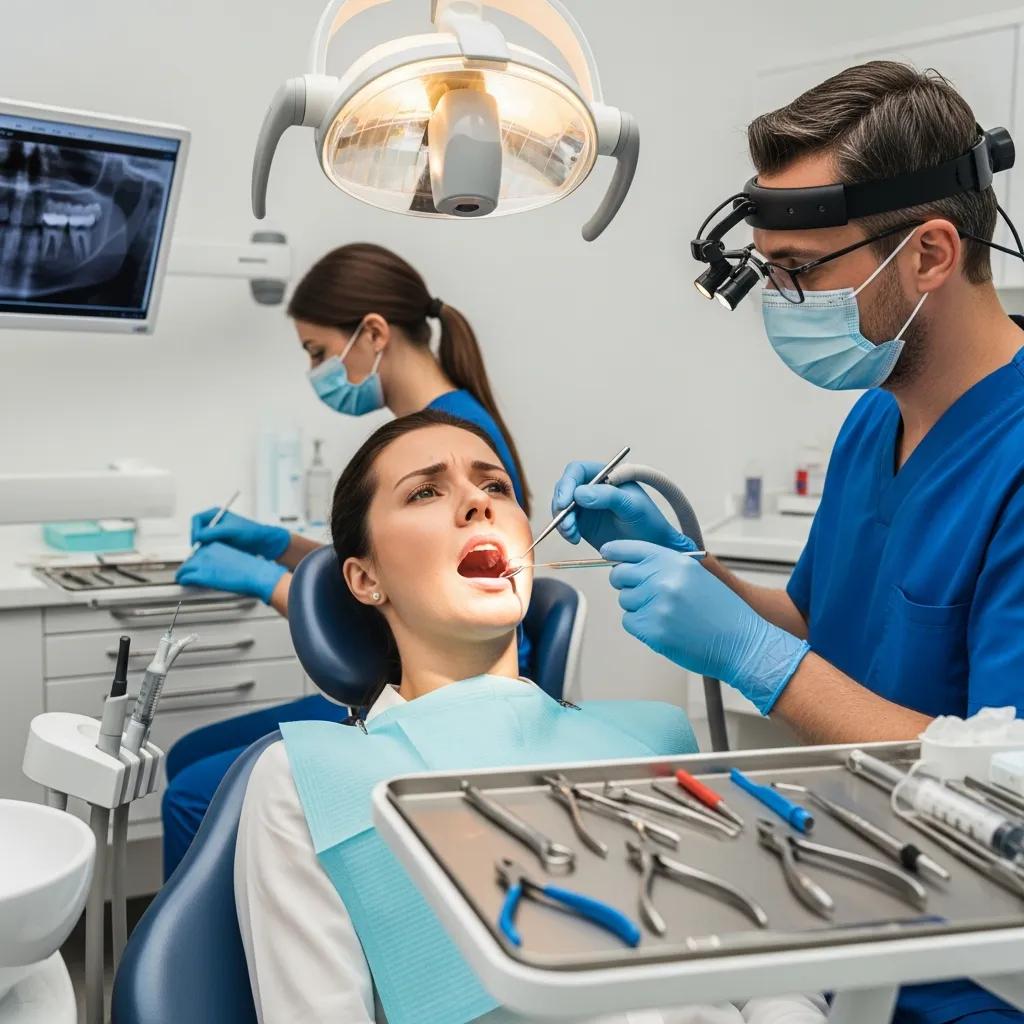
Dry socket usually shows up two to four days after a tooth is pulled, as throbbing pain that gets worse instead of better, often spreading toward your ear, with an empty-looking socket and a bad taste. It needs a dentist. Cleaning the socket and placing a soothing dressing often brings real relief soon after.
Pain getting worse after an extraction? $99 emergency new-patient exam, X-rays included. Walk-ins welcome during open hours.
3607 Oak Lawn Ave, Suite 250, Dallas · Mon & Wed 10–7 · Fri 3–7 · Sat 10 AM–8 PM · Closed Tue, Thu & Sun · Our care team speaks Spanish.
What is dry socket?
After a tooth comes out, a blood clot forms in the empty socket. That clot is the start of healing. It covers the bone and the nerve endings underneath while new tissue grows in.
Dry socket happens when that clot comes loose or breaks down too early. The bone and nerves are left exposed to air, food, and liquid, and that is what makes it hurt so much. Dentists call it alveolar osteitis. It is one of the most common problems after an extraction, and it is most often seen after lower wisdom teeth or a difficult extraction.
What are the signs of dry socket?
- Pain that gets worse after day two or three instead of slowly easing.
- Pain that spreads to your ear, eye, temple, or neck on the same side as the extraction.
- An empty-looking socket, where the dark clot is missing and you may see whitish bone.
- A bad taste or bad breath coming from the socket.
- Pain medicine that is no longer keeping up with the pain.
Some soreness and swelling after an extraction is normal. Normal healing hurts most in the first day or two and then gets steadily better. Dry socket feels like you were improving and then took a sharp turn for the worse.
Is it dry socket, normal healing, or an infection?
These three can feel similar at first. This table shows the usual differences, but only an exam can tell you for sure.
| Sign | Normal healing | Dry socket | Possible infection |
|---|---|---|---|
| When pain peaks | First 1 to 2 days, then eases | Gets worse around day 2 to 4 | Can build over several days |
| What the socket looks like | Dark clot, then pink tissue | Empty, may show whitish bone | Red, swollen, may have pus |
| Swelling | Mild, peaks early, then goes down | Usually little swelling | Swelling that keeps growing |
| Fever | No | Usually no | Can have fever or feel unwell |
| What to do | Follow your aftercare | See a dentist | See a dentist promptly; ER if swelling spreads |
If you are not sure which one you have, get it checked. Our guide to whether a tooth infection can go away on its own explains infection warning signs in more detail.
What makes dry socket more likely?
- Smoking or vaping. The suction and the chemicals both work against the clot.
- Drinking through a straw in the first several days.
- Hard spitting or strong rinsing too soon after the extraction.
- A difficult extraction, such as an impacted lower wisdom tooth.
- Hormonal birth control, which has been linked to a higher chance of dry socket.
- A past dry socket or an infection near the tooth before it was removed.
Following your aftercare instructions closely is the best protection.
How does a dentist treat dry socket?
Treatment is quick and usually done in one short visit:
- Exam and X-ray. Your dentist checks the socket and, when needed, takes an X-ray to rule out an infection or a small piece of tooth or bone left behind.
- Gentle cleaning. The socket is rinsed to clear out food and debris.
- A medicated dressing. A soft, soothing dressing is placed in the socket to cover the exposed bone. This is the step that brings most people relief.
- A plan for the next few days. You may come back for a dressing change, and you will get home care steps and guidance on pain medicine.
Dry socket is not usually an infection, so antibiotics are not the standard treatment. Your dentist will prescribe them only if the exam shows an infection.
What can I do at home until I see a dentist?
- Take an over-the-counter pain reliever exactly as the label directs, unless your doctor has told you not to.
- Rinse very gently with warm salt water after meals, letting it fall out of your mouth instead of spitting hard.
- Chew on the other side and stick to soft, lukewarm foods.
- Skip straws, smoking, and vaping completely.
- Do not poke the socket with your finger, a toothpick, or your tongue.
Home care can take the edge off, but it does not cover the exposed bone. Our guide to relieving wisdom tooth pain has more safe pain-relief tips.
When is it an emergency?
Dry socket is painful but is rarely dangerous. Go to the ER right away, or call 911, if you have:
- swelling that spreads toward your eye, jaw, or neck,
- a fever with growing swelling,
- trouble breathing or swallowing,
- bleeding that will not stop with firm pressure.
For pain without those signs, a dentist is the right place to go. Our emergency dentist page explains what we treat the same day.
Dry socket pain? We can clean the socket and place a soothing dressing. $99 emergency new-patient exam with X-rays.
3607 Oak Lawn Ave, Suite 250, Dallas · Mon & Wed 10–7 · Fri 3–7 · Sat 10 AM–8 PM · Closed Tue, Thu & Sun · Our care team speaks Spanish.
Can I go to a different dentist if my tooth was pulled somewhere else?
Yes. If the office that did your extraction is open and can see you soon, calling them first makes sense, because they know your case. But many offices are closed on weekends and evenings, and dry socket does not wait. Bleu Dentistry welcomes new emergency patients, including people whose tooth was removed at another office.
Your visit starts with the $99 emergency new-patient exam with X-rays, and the cost of any treatment is given to you in writing before we begin.
About insurance: We're in-network with some dental plans and work with many other PPO plans as an out-of-network office — we file the claim for you, look up your benefits, and give you your costs in writing before any treatment. Flexible payment options are explained on our financing page.
Do you do extractions at Bleu Dentistry?
Yes. Tooth extractions are done in-house, including impacted wisdom teeth, with sedation options for nervous patients. If pain gets worse instead of better after one of our extractions, call us. Our guide to same-day emergency extractions walks through the visit, and our article on bone grafts after an extraction covers what comes next if you plan to replace the tooth.
We also see children for dental emergencies, so a parent can bring a child in for pain after a tooth was removed.
Where can I get dry socket treated in Dallas?
Bleu Dentistry is at 3607 Oak Lawn Ave, Suite 250, in Oak Lawn, a short drive from Uptown, Highland Park, and Knox-Henderson. We have 280+ Google reviews from Dallas patients, and our care team speaks Spanish (nuestro equipo de atención habla español).
| Day | Hours |
|---|---|
| Monday | 10 AM to 7 PM |
| Tuesday | Closed |
| Wednesday | 10 AM to 7 PM |
| Thursday | Closed |
| Friday | 3 PM to 7 PM |
| Saturday | 10 AM to 8 PM |
| Sunday | Closed (online booking open) |
On a closed day, you can book online any time for our next opening. See our Saturday dentist guide for weekend visits.
Bottom line
If your pain after an extraction starts getting worse around day two to four, spreads toward your ear, and comes with an empty-looking socket or a bad taste, it is likely dry socket. It is very treatable. A dentist can clean the socket and place a soothing dressing, and most people feel the difference soon after.
Get dry socket pain checked fast. $99 emergency new-patient exam, X-rays included.
3607 Oak Lawn Ave, Suite 250, Dallas · Mon & Wed 10–7 · Fri 3–7 · Sat 10 AM–8 PM · Closed Tue, Thu & Sun · Our care team speaks Spanish.