
How Is an Abscessed Tooth Treated?
What a dentist does to fix a tooth abscess, why antibiotics and mouthwash are not enough, when it is an emergency, and same-day care in Oak Lawn.
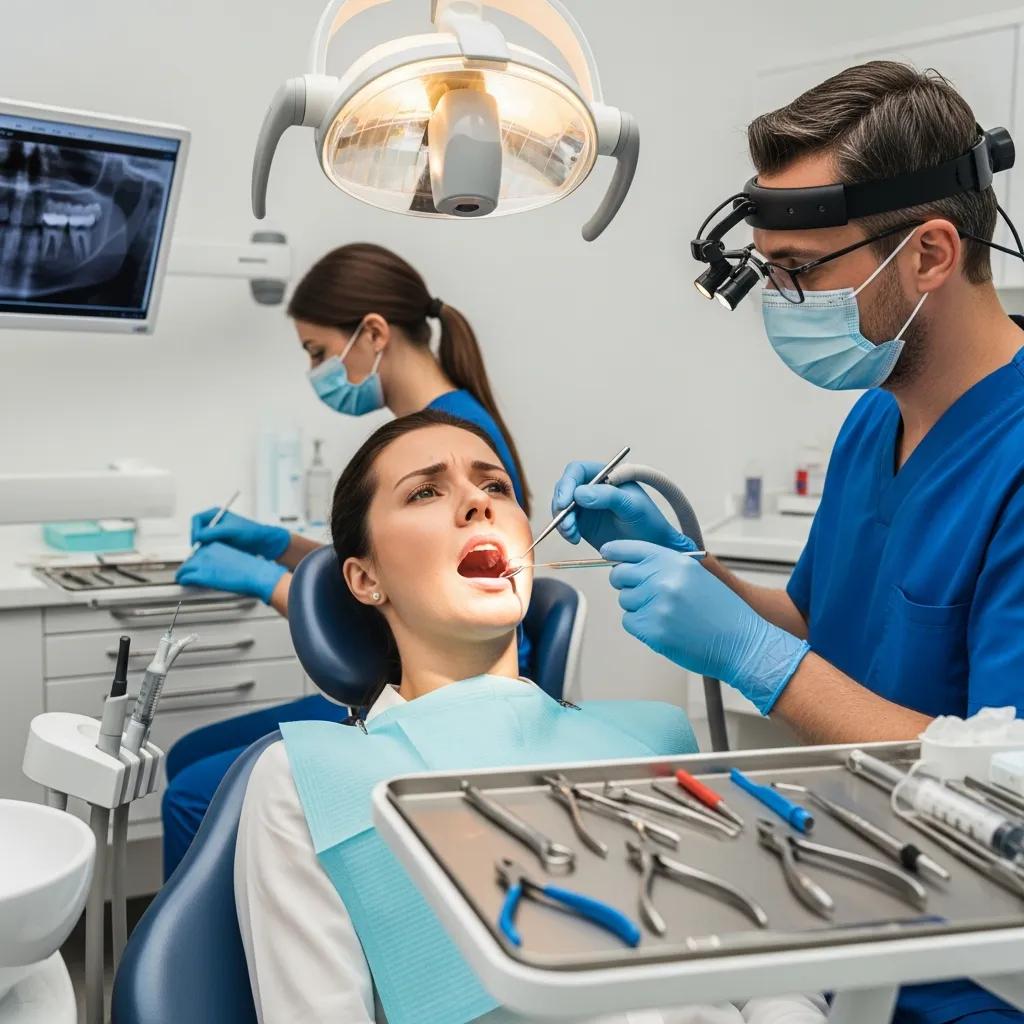
An abscessed tooth is treated by removing the source of the infection, not just calming it. A dentist drains the pus, then saves the tooth with root canal treatment or removes it with an extraction. Antibiotics help only when the infection is spreading. Treatment can often start at the first visit.
Throbbing tooth, swelling, or a bump on your gum? Get it treated, not just covered up. $99 emergency new-patient exam, X-rays included.
3607 Oak Lawn Ave, Suite 250, Dallas · Mon & Wed 10–7 · Fri 3–7 · Sat 10 AM–8 PM · Closed Tue, Thu & Sun · Todo nuestro equipo habla español.
What is a tooth abscess?
A tooth abscess is a pocket of pus caused by bacteria. It usually starts in one of two places. A periapical abscess forms at the tip of the root after decay or a crack lets bacteria reach the nerve inside the tooth. A periodontal abscess forms in the gum beside the tooth, often where gum disease has left a deep pocket.
Common signs include a deep, throbbing ache, pain when you bite, a bad taste, a pimple-like bump on the gum, and swelling in the gum, cheek, or jaw. Our guide to the warning signs of a dental abscess covers the symptoms in more detail. This article is about what fixes it.
How does a dentist treat an abscessed tooth?
Every case is different, but treatment usually follows the same path:
- Exam and X-rays. Your dentist finds which tooth is the source and how far the infection has reached.
- Numbing. The area is numbed before any treatment begins.
- Drainage. A small opening lets the pus drain. Pressure is what makes an abscess throb, so many people feel better soon after this step.
- Treating the source. The tooth is cleaned out and sealed with root canal treatment, or removed if it cannot be saved. A gum abscess is cleaned deep under the gum line.
- Medicine when needed. Antibiotics may be prescribed if the infection has spread into nearby tissue or you have a fever.
Our emergency dentist page lists the problems we treat at same-day visits.
What are the treatment options?
This table is a general guide. Your dentist will explain which options fit your tooth after the exam.
| Treatment | What it does | When it is used | Cost at Bleu Dentistry |
|---|---|---|---|
| Emergency exam with X-rays | Finds the source and how far the infection has spread | Every new emergency visit | $99 for new emergency patients |
| Drainage | Releases pus and pressure | Swelling or a pocket of pus | Shown in writing before treatment |
| Root canal treatment | Cleans infection out of the inside of the tooth and seals it, so you keep the tooth | The tooth is strong enough to save | Shown in writing before treatment |
| Simple extraction | Removes a tooth that cannot be saved | Tooth is fully above the gum | $150 to $300 |
| Surgical extraction | Removes a broken, impacted, or hard-to-reach tooth | Tooth is broken at the gum line or impacted | $250 to $650 |
| Deep cleaning under the gum | Clears bacteria from a gum pocket | Periodontal (gum) abscess | Shown in writing before treatment |
| Antibiotics | Slows an infection that is spreading | Added to treatment, not a cure on its own | Prescribed when needed |
You will see the price of your treatment in writing before anything is done, and flexible payment plans are available through our dental financing options.
Do antibiotics cure an abscessed tooth?
No. This is the most common misunderstanding about tooth infections. Antibiotics travel through your blood, but the bacteria in an abscess live inside the tooth or deep in a gum pocket, where blood flow is poor. The medicine can calm the swelling for a while, and the pain may fade, but once the prescription ends the infection usually returns.
That is why antibiotics are a helper, not the fix. Do not take leftover antibiotics or someone else's prescription. Our article on whether a tooth infection can go away on its own explains why the pain can stop while the infection keeps growing.
Will mouthwash, Listerine, or salt water kill a tooth infection?
No. Rinses can make your mouth feel cleaner and may ease soreness for a short time, but they cannot reach the infection inside the tooth or under the gum. The same is true for clove oil, garlic, hydrogen peroxide, and other home remedies you may see online. They can be part of comfort care while you arrange a visit, but they do not treat the abscess.
A few things can make an abscess worse. Do not squeeze or pop a bump on your gum, do not put aspirin directly on the gum, and do not use heat on a swollen cheek.
What about an abscess on the gum or inside the cheek?
A pimple-like bump on the gum is often a drain point for an infection at the root of a tooth. It may pop, taste salty, and seem to go away, but the infection is still there. Our guide to a bump on the gum explains the common causes.
Swelling inside the cheek can come from an infected back tooth, an infected wisdom tooth, or a gum abscess. It can also be something other than a tooth problem, which is one more reason to have it checked with X-rays instead of guessing.
When is an abscessed tooth an emergency?
An abscess should be seen the same day or the next open day. Go to the emergency room right away, or call 911, if you have any of these:
- Swelling that spreads toward your eye, jaw line, or neck.
- Fever, chills, or you feel very ill.
- Trouble breathing or swallowing.
- You cannot open your mouth normally.
These signs mean the infection may be spreading and needs hospital care first. Once you are stable, the tooth still needs dental treatment.
Should I save the tooth or have it pulled?
When a tooth is strong enough, root canal treatment lets you keep it, and a crown is often placed afterward to protect it. Our root canal page explains that visit. When a tooth is cracked below the gum line, badly decayed, or very loose, removing it may be the better choice. Simple and surgical extractions, including impacted wisdom teeth, are done right here in our office. Learn more on our tooth extraction page or in our guide to emergency tooth extraction in Dallas.
Does abscess treatment hurt?
The area is numbed before treatment, and many people say the throbbing eases once the pressure is released. If you feel anxious, ask about our sedation options, which include nitrous oxide, oral sedation, and IV sedation. There is no need to go elsewhere for IV sedation; it is all done at our office by an anesthesiologist.
What can I do until my visit?
- Take an over-the-counter pain reliever exactly as the label directs.
- Rinse gently with warm salt water a few times a day.
- Hold a cold compress on your cheek, 15 minutes on and 15 minutes off.
- Keep your head raised when you lie down.
- Chew on the other side and avoid very hot, cold, or sugary food.
Bleu Dentistry also sees children for dental emergencies. Ask a pharmacist about the right pain reliever and amount for a child.
How fast can I be seen in Dallas?
Bleu Dentistry is open Monday and Wednesday from 10 AM to 7 PM, Friday from 3 PM to 7 PM, and Saturday from 10 AM to 8 PM. We are closed Tuesday, Thursday, and Sunday. Walk-ins are welcome during open hours, and online booking is open around the clock, so you can reserve the next opening from your phone even at night. If your tooth flares up late in the week, our Saturday emergency page has the details.
We are at 3607 Oak Lawn Ave, Suite 250, in Oak Lawn, a short drive from Uptown, Downtown, and Highland Park. Bleu Dentistry is a Black-owned practice founded by Dr. Allen Charles, DDS, who trained at Howard University College of Dentistry, and our team has earned 280+ Google Reviews from Dallas patients. Todo nuestro equipo habla español.
Bottom line
An abscessed tooth does not heal with antibiotics, mouthwash, or time. It is fixed by draining the infection and then saving the tooth with root canal treatment or removing it. Get it seen the same day or the next open day, and go to the ER first if swelling spreads or you have a fever or trouble breathing.
Get the infection treated at the source. $99 emergency new-patient exam, X-rays included. Walk-ins welcome during open hours.
3607 Oak Lawn Ave, Suite 250, Dallas · Mon & Wed 10–7 · Fri 3–7 · Sat 10 AM–8 PM · Closed Tue, Thu & Sun · Todo nuestro equipo habla español.